Exercise: Build the Dog, Don’t Just Tire the Dog
Staffords need physical activity, but more is not automatically better.
The purpose of exercise is to develop a healthy body, confidence, coordination, skill and a dog that can live comfortably in his own skin. Endless high-arousal activity can produce a fitter dog without producing a more balanced one.
Puppies
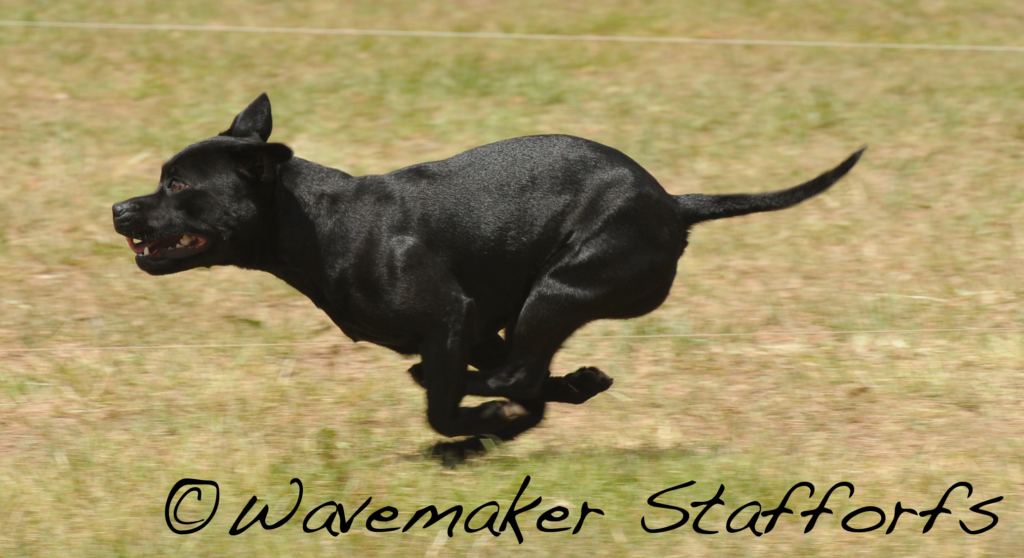
Growing puppies benefit from self-directed play, exploration, varied safe surfaces, short training sessions and age-appropriate opportunities to climb, balance, sniff and solve problems. Avoid repetitive forced mileage, sustained jumping and high-impact endurance work while the body is still developing.
There is no useful one-size-fits-all stopwatch formula for puppy exercise. Breed, individual development, intensity, surface, temperature, recovery and the type of activity all matter.
Adults
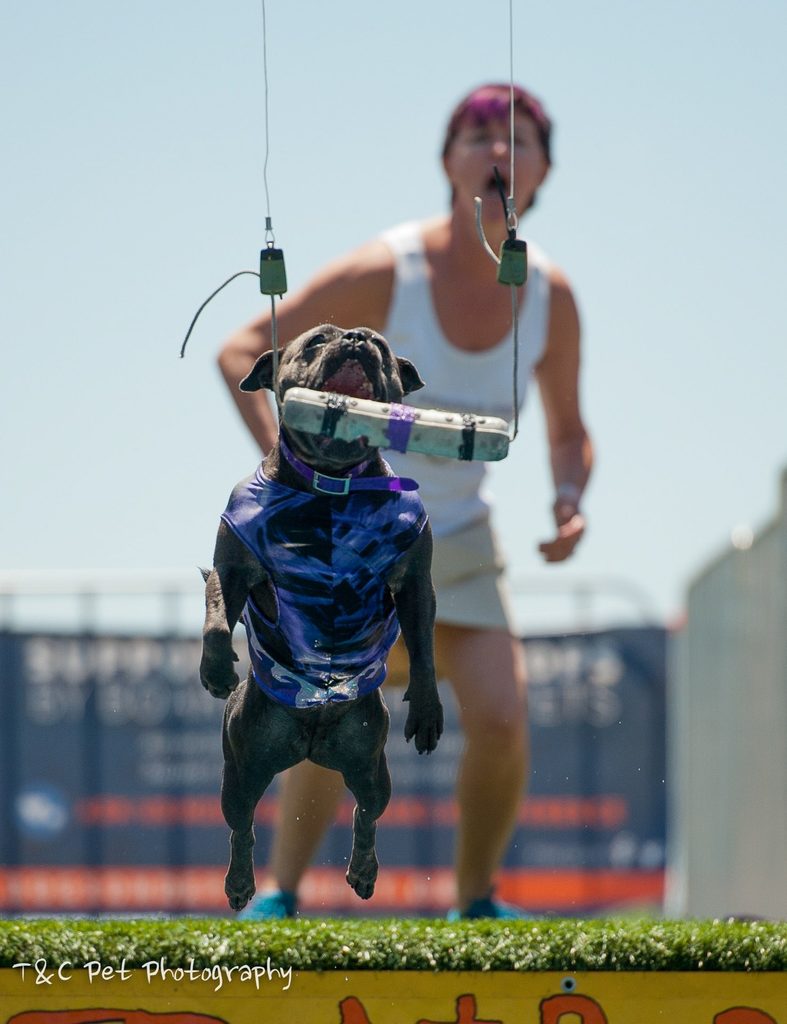
As a Stafford matures, exercise can include structured walks, hiking, tug, flirt-pole work, swimming and performance sports such as scent work, obedience, rally, agility, Fast CAT or dock diving. Build fitness progressively and teach the skills that make intensity safe.
Heat and arousal
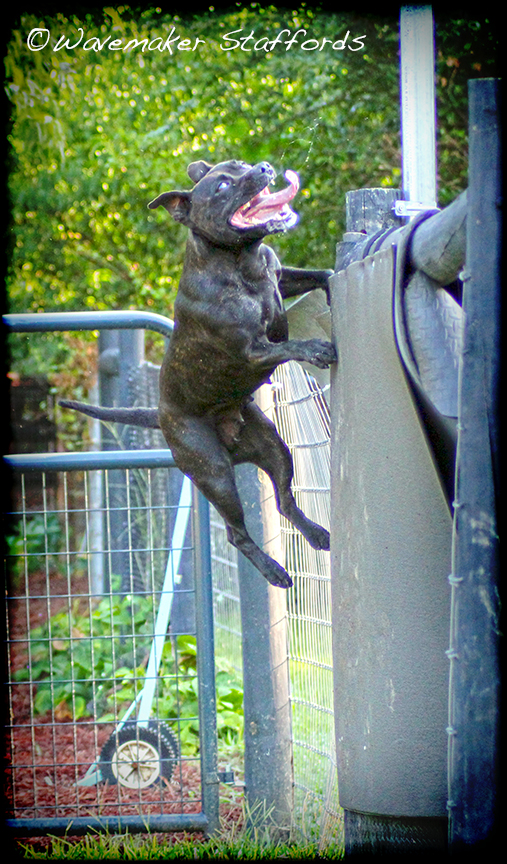
Staffords can be remarkably willing to keep going after good judgment has left the building. Handlers have to make the decision to stop. Warm or humid weather, repeated sprinting and high arousal deserve particular care. Provide water, shade, recovery time and watch the individual dog rather than relying on enthusiasm as evidence that he is fine.
Teach the off switch
One of the most valuable things a high-energy Stafford can learn is how to do nothing.
Reward calm. Practice settling. Build quiet time into the day. A dog who can only function at maximum output is not better trained because he is exhausted.
The goal is a Stafford who can switch on with enthusiasm and switch off with equal confidence — physically capable, mentally engaged and easy to share a life with.