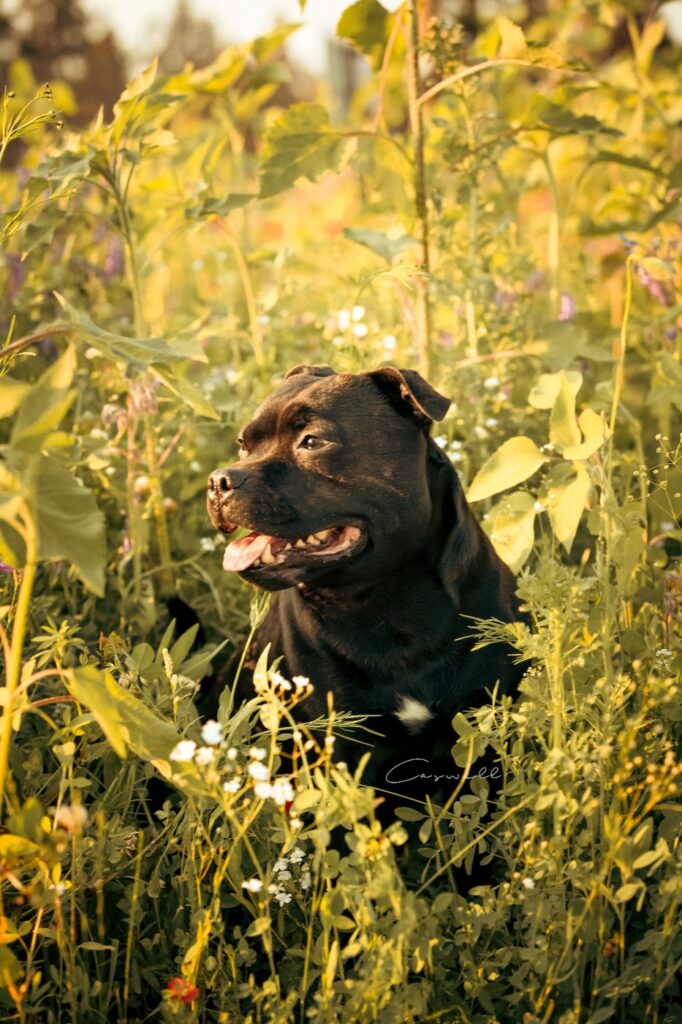
Balance & Breed Type
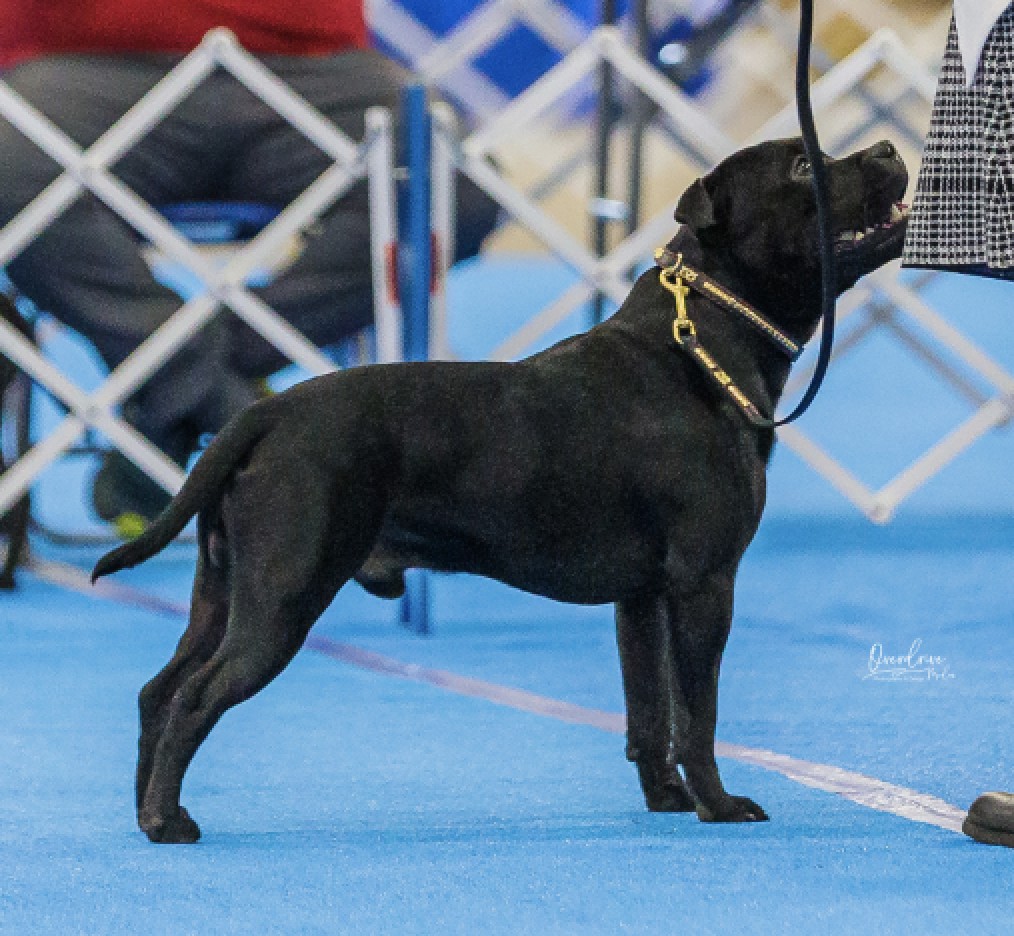
The Staffordshire Bull Terrier should make sense at first glance.
Nothing should overwhelm the dog in front of you.
Not the head.
Not the bone.
Not the chest.
Not the muscle.
A balanced Stafford is a harmonious combination of strength, agility, substance and athleticism.
Balance Means No Exaggeration
The Stafford Breed Standard begins by describing a dog that is:
“well balanced, of great strength for his size… muscular, active and agile.”
Those words belong together.
A Stafford should have enough bone, muscle and substance to convey considerable strength—but never so much that he becomes heavy, coarse or cumbersome.
At the opposite extreme, he should not become so light or refined that the strength characteristic of the breed disappears.
Think middleweight athlete, not heavyweight bodybuilder and not distance runner.
The correct Stafford lives somewhere between those extremes.
The Head Must Belong to the Dog
The Stafford head is distinctive, but it should remain in proportion to the body.
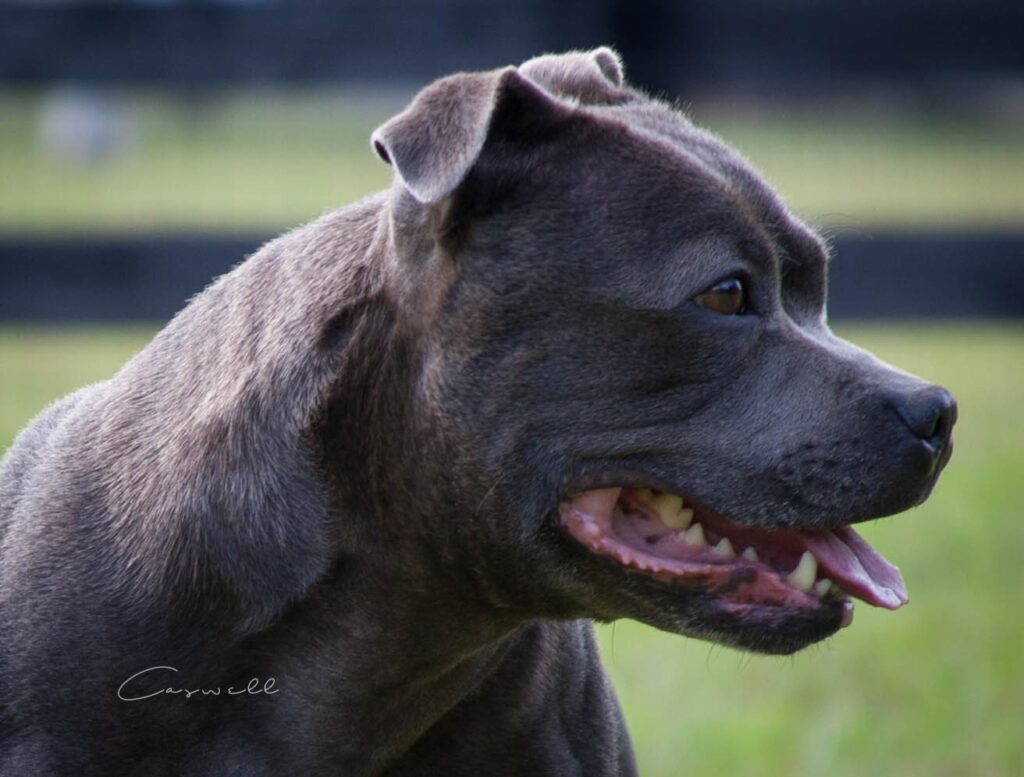
The skull should be broad, the cheek muscles pronounced and the foreface short, with a distinct stop and strong underjaw.
But bigger is not automatically better.
An oversized head, excessively short muzzle, exaggerated stop, heavy lips or fleshy wrinkles can destroy balance just as surely as a narrow or weak head can.
The current SBTCA educational material describes the ideal head as balanced and not oversized, with a distinct—but not vertical—stop and a muzzle no more than approximately one-third of the skull-to-muzzle relationship.
Enough — Not Excess
The same principle applies throughout the Stafford.
Enough chest—but not a barrel.
Enough bone—but not massive bone.
Enough muscle—but not bunchy or cumbersome muscle.
Enough leg—but neither squat nor leggy.
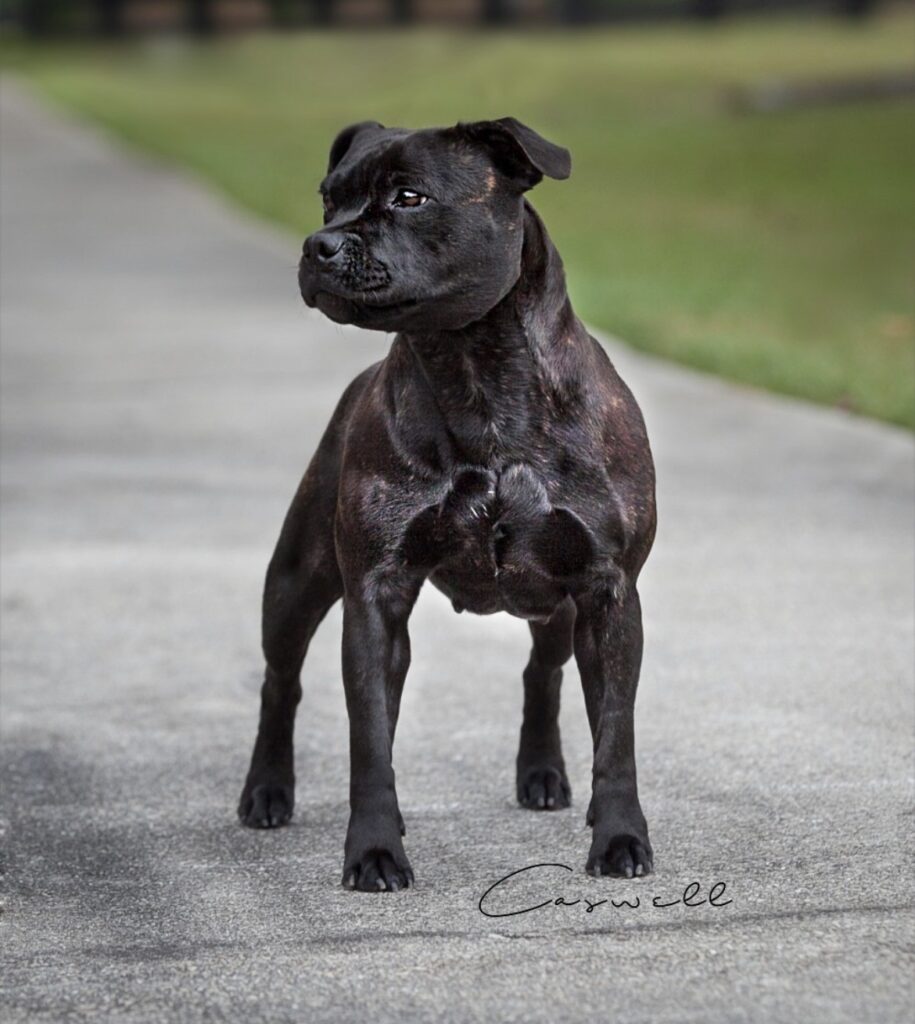
Enough rear—but not exaggerated angulation.
The front legs should drop cleanly beneath the dog, the feet turning out slightly as the Standard describes, while the rear should look strong and balanced with the front.
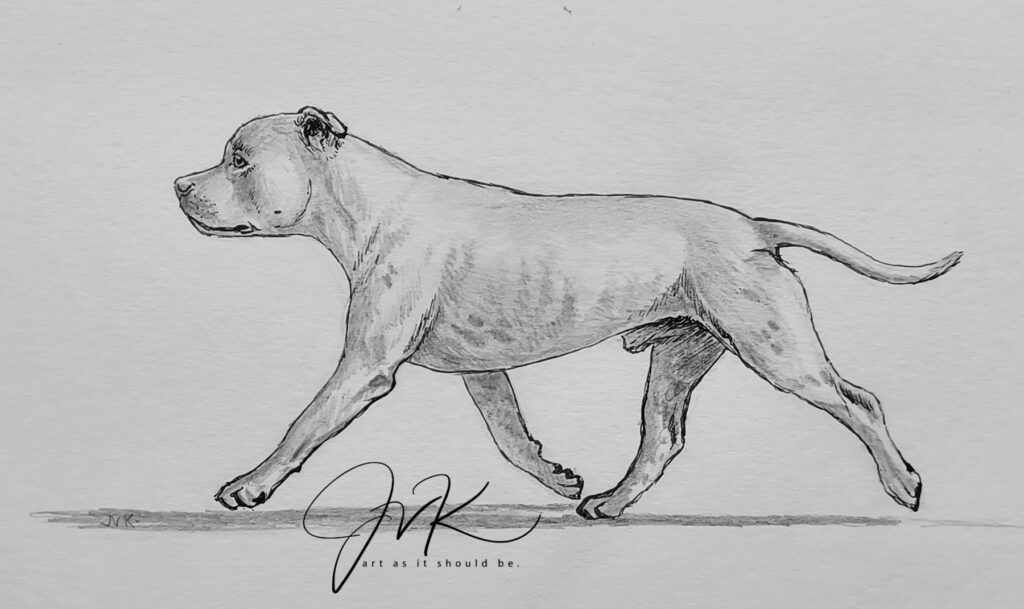
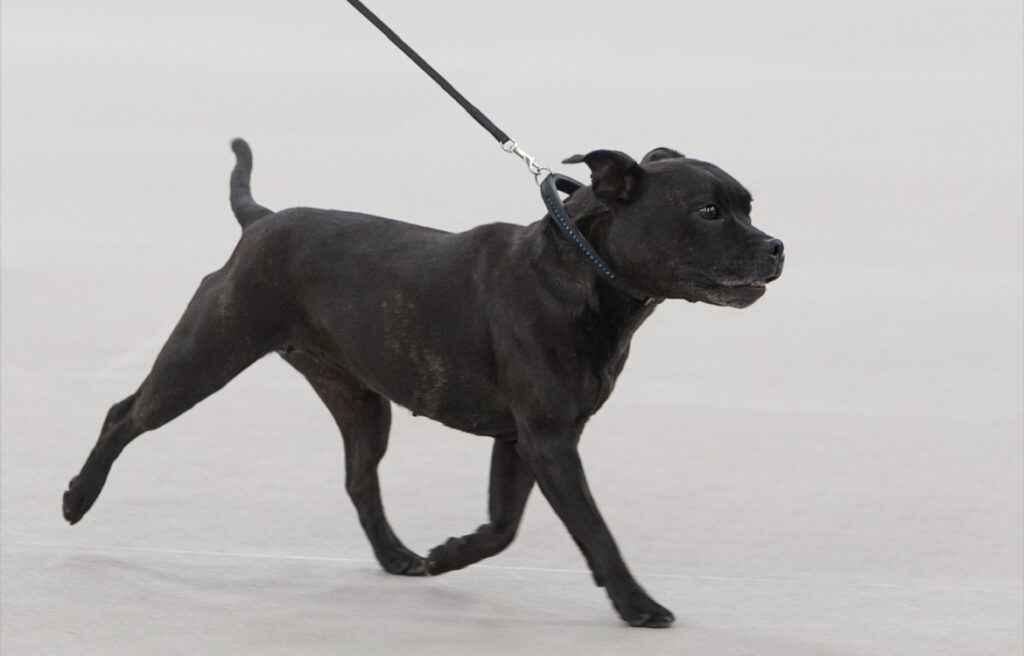
The body should show a clear waist and tuck-up rather than heaviness through the loin.
Everything should contribute to the impression of a compact, powerful athlete.
Breed Type
Breed type is harder to define because it is more than a checklist.
It is the collection of characteristics that makes you look at a dog and immediately recognize:
That is a Staffordshire Bull Terrier.
Head, expression, proportions, substance, movement, temperament and overall outline all contribute.
A beautifully constructed dog can still lack Stafford type.
Likewise, a very “typey” dog may still contain structural faults.
The ideal combines both.
The Overall Picture
When we look at a Stafford, we ask ourselves a simple question:
Do we notice the dog—or one exaggerated feature?
If the first reaction is “What an enormous head!” or “Look at that massive chest!” then the balance may already be lost.
The best Staffords do not need one feature to announce them.
The whole dog does it.
Strong without heaviness.
Muscular without bulk.
Athletic without raciness.
Distinctive without exaggeration.
That, to us, is balance.
And when all of those qualities come together in the unmistakable outline, expression and character of the breed—
that is breed type.